| Back to Back Issues Page |
 |
|
Medical News and Commentary June 06, 2026 |
CVMS Members and FriendsJune 5, 2026
"The secret to the care of the patient is in caring for the patient..."
Caregiver Renewal Conference
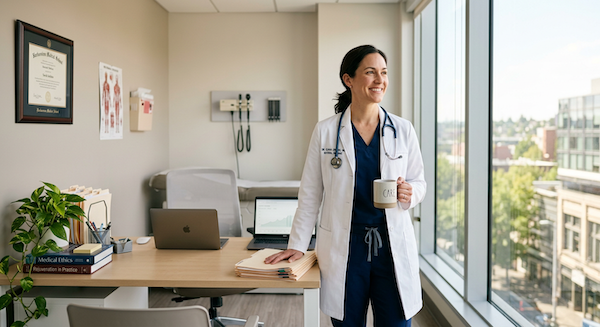
The Caregiver Renewal Conference held last month at the Sentara Health Education Center by Dr. Keith Burger and Susan Hoskins was attended by healthcare professionals from all over the U.S. and was quite effective in teaching about how to successfully handle the internal stress of acute situational emergencies. Continuation of these discussions will be held virtually every Thursday evening at 7pm using the following Zoom link for anyone interested in learning these techniques. Consideration will be given to scheduling more in-person conferences like this in the future with the ultimate goal of providing a stress-reducing learning resource for prevention of burnout and depression among healthcare professionals as well as learning methods to continue to enjoy careers in healthcare despite the everyday stresses of these lifesaving professions.
Link for Caregiver Renewal sessions Save the Dates:
Please mark your calendars for these upcoming events scheduled by CVMS: MedWebs: (Educational Webinars): To be held on the first Tuesday of every month at 7 PM by Zoom link. A variety of topics will be considered about things other than medicine that you need to know, including finances, investments, medical ethics, risk management, how to deal with insurance companies that don't pay, medico-legal issues, time management, office/staff management, best practice methods, types of practice, dealing with types of patients, dealing with barriers in patient care, etc.Links will be sent out 1-2 days before the webinar. EVMS Grand Rounds: All students, residents and physicians in Tidewater are invited to these remarkably educational seminars on various medical topics where you can earn CMEs and stay up-to-date. Caregiver Renewal: every Thursday evening at 7PM by Zoom.(See the Link above> CVMS Dinner Meeting: Tentatively scheduled for Friday, September 18 at 6PM. Location TBD. CVMS Will Present Proposals for Change at the Annual MSV Meeting this October
One of our primary commitments to the physicians and patients in eastern Virginia is to advocate for better healthcare in this area. Our proposals for change this year and in following years will include these principles: 1. Opposition to raising the malpractice cap in Virginia. 2. Fighting against denials and delays for appropriate medical care from insurance companies. 3. Continual opposition to COPN Laws in Virginia. 4. Promotion of universal healthcare for all. 5. Promotion of greater independence and more physician involvement in public healthcare decisions. 6. Create solutions to problems that prevent access and cause barriers to healthcare in Virginia. What are the Consequences of Raising the Malpractice Cap in Virginia?
Virginia currently has one of the more restrictive medical malpractice caps in the country because the cap applies to *total damages* — including medical expenses, lost income, and pain and suffering combined — not just non-economic damages. The cap is currently about $2.7 million and is scheduled to rise gradually to $3 million by 2031. ([Virginia Law][1]) A proposal being debated in Virginia would potentially raise the cap dramatically, in some versions up to $6 million. ([vacep.org][2]) The consequences of raising the malpractice cap could be significant and would likely affect several groups differently. ### Potential Positive Consequences #### Greater compensation for severely injured patients The strongest argument for increasing the cap is that some catastrophically injured patients currently cannot recover enough compensation to cover lifelong costs. Examples include: * severe birth injuries * permanent neurological damage * paralysis * lifelong custodial care for children or disabled adults Under the current cap, even if a jury awards substantially more, the court reduces the award to the statutory maximum. ([Hollingsworth, PLLC][3]) Supporters argue that: * inflation and healthcare costs have risen dramatically since the cap structure was created * families facing decades of care expenses may be undercompensated * the current cap can disproportionately affect younger patients with lifelong disabilities #### Increased accountability Some advocates believe higher caps: * create stronger incentives for hospitals and providers to improve safety systems * discourage negligent behavior * increase transparency around medical errors Critics of low caps argue that overly restrictive caps may weaken deterrence. #### Better access to attorneys for complex cases Medical malpractice litigation is extremely expensive because it requires: * expert witnesses * extensive medical review * years of litigation If potential recoveries remain capped at relatively low levels, attorneys may decline complicated but legitimate cases because costs exceed likely returns. Raising the cap could increase access to legal representation for injured patients. --- ### Potential Negative Consequences #### Higher malpractice insurance premiums This is the concern most frequently raised by physician groups, hospitals, and insurers. If insurers face the possibility of larger payouts: * malpractice premiums may rise * high-risk specialties could be affected most severely Specialties likely most affected include: * obstetrics * neurosurgery * trauma surgery * emergency medicine Virginia physician organizations and hospital groups have warned that doubling the cap could significantly increase liability costs. ([ATRA][4]) #### Reduced physician recruitment and retention Higher liability exposure can make a state less attractive for physicians, particularly in high-risk specialties. Potential consequences could include: * fewer physicians willing to practice in Virginia * earlier retirement of older physicians * consolidation into large health systems for liability protection * fewer independent practices This concern is especially relevant in: * rural Virginia * underserved urban communities * labor-and-delivery services Hospitals argue these effects could worsen existing physician shortages. ([CBS 6 News Richmond WTVR][5]) #### Increased healthcare costs Higher malpractice premiums may ultimately be passed along through: * hospital charges * insurance premiums * healthcare system operating costs Some economists argue the overall effect is modest, while others believe it contributes meaningfully to healthcare inflation. #### More defensive medicine Physicians may order: * more tests * more consultations * more imaging * more admissions primarily to reduce legal exposure rather than because they are medically necessary. Defensive medicine is controversial because: * some studies suggest it is widespread * others suggest malpractice fears are only one contributor But physicians frequently report that litigation concerns influence practice patterns. --- ### Possible Impact on Virginia Specifically Virginia has historically maintained a relatively physician-friendly malpractice environment compared with many states. That environment is often cited as helping: * recruit physicians * stabilize malpractice premiums * preserve access in high-risk specialties A major cap increase could shift Virginia toward a more plaintiff-friendly legal climate. However, supporters argue Virginia’s cap is now unusually restrictive because it limits *all* damages rather than only pain-and-suffering damages, which many other states allow without limits. ([Lawsuit Information Center][6]) --- ### The Central Policy Debate The real debate is about balancing two competing priorities:
1. Patient advocates concerned about fair compensation and accountability; 2. Physicians/hospitals concerned about access to care and liability stability. Both sides have legitimate concerns: * catastrophic malpractice injuries can financially devastate families * excessive liability exposure can destabilize fragile healthcare systems That is why many states try to find a middle ground: * moderate caps * separate caps for non-economic damages only * periodic payments for catastrophic injuries * patient compensation funds * specialized medical courts or review panels Virginia’s debate is becoming increasingly important because the state already faces: * physician shortages * rural hospital financial stress * rising healthcare costs * growing dissatisfaction with malpractice limitations among patient advocates. This may end up as a compromise in which neither party will be completely happy about. References: [1]: https://law.lis.virginia.gov/vacode/title8.01/chapter21.1/section8.01-581.15/?utm_source=chatgpt.com "§ 8.01-581.15. Limitation on recovery in certain medical ..." [2]: https://www.vacep.org/news-blog/medmal2026?utm_source=chatgpt.com "In a late-in-session move, a bill to raise the medical ..." [3]: https://hollingsworthpllc.com/understanding-virginias-cap-on-medical-malpractice-damages/?utm_source=chatgpt.com "Understanding Virginia's Cap on Medical Malpractice ..." [4]: https://atra.org/medical-liability- crisis-brewing-in-virginia/?utm_source=chatgpt.com "Medical Liability Crisis Brewing in Virginia" [5]: https://www.wtvr.com/news/local-news/virginia-medical-malpractice-cap-march-6-2026?utm_source=chatgpt.com "Injured by a medical mistake? Virginia considers doubling ..." [6]: https://www.lawsuit-information-center.com/virginia-medical-malpractice-cases.html?utm_source=chatgpt.com "Virginia Medical Malpractice Law and Settlement Value" How Will AI Affect Healthcare in the U.S. Over the Next Ten Years?
AI will reshape U.S. healthcare, but unevenly. The biggest changes will likely be less “robot doctors” and more AI everywhere in the workflow. Over the next 10 years, expect: **1. Faster, more automated clinical work** AI will increasingly draft notes, summarize records, suggest diagnoses, flag abnormal imaging/labs, and help clinicians keep up with guidelines. Physicians are already adopting it rapidly; the AMA reported in 2026 that more than 80% of physicians use AI professionally. ([American Medical Association][1]) **2. Better diagnostics—but not automatic better care** Radiology, pathology, dermatology, cardiology, ophthalmology, and ICU monitoring will benefit from AI pattern recognition. FDA oversight is expanding; the FDA has issued guidance for AI-enabled device software and lifecycle management. ([U.S. Food and Drug Administration][2]) **3. Major administrative disruption** AI will take over parts of scheduling, billing, coding, documentation, referrals, appeals, call centers, and prior authorization. This could reduce burnout—but insurers may also use AI to deny or delay care faster, which could become a major political and regulatory fight. **4. More patient self-triage** Patients will increasingly ask AI before calling a doctor. That may improve access for simple questions, but it also risks false reassurance, delayed care, and misinformation—especially in mental health and urgent symptoms. **5. A new “digital front door” to care** Primary care may become hybrid: AI intake, symptom review, medication checks, home monitoring, then physician/NP/PA review. Done well, this could improve chronic disease care. Done poorly, it could become another depersonalized barrier. **6. Workforce changes, not mass replacement** AI will not replace physicians broadly, but clinicians who use AI well may replace workflows that do not. Medical assistants, scribes, coders, utilization reviewers, and call-center roles may change significantly. **7. More regulation and liability questions** The National Academy of Medicine released an AI Code of Conduct in 2025 emphasizing responsible, equitable, human-centered AI use. ([NAM][3]) Expect more rules around transparency, bias, audit trails, FDA review, privacy, and malpractice responsibility. **8. Equity could improve — or worsen** AI could bring specialty-level guidance to rural and underserved areas. But biased data could worsen disparities in diagnosis, insurance approvals, maternal health, pain treatment, and risk scoring. Equity audits will be essential. **Bottom line: AI will probably make U.S. healthcare faster, more data-driven, and more automated. Whether it becomes more humane, affordable, and accessible will depend less on the technology itself and more on who controls it: physicians and patients — or hospitals, insurers, vendors, and billing systems. References: [1]: https://www.ama-assn.org/practice-management/digital-health/more-80-physicians-use-ai-professionally-ama-survey?utm_source=chatgpt.com "More than 80% of physicians use AI professionally: AMA ..." [2]: https://www.fda.gov/medical-devices/software-medical-device-samd/artificial-intelligence-software-medical-device?utm_source=chatgpt.com "Artificial Intelligence in Software as a Medical Device" [3]: https://nam.edu/our-work/programs/leadership-consortium/health-care-artificial-intelligence-code-of-conduct/?utm_source=chatgpt.com "Health Care Artificial Intelligence Code of Conduct" How Will AI Affect Employment Opportunities for College Graduates?
AI will almost certainly reduce employment opportunities for some college graduates — but it will also create new opportunities and change what employers value. The impact will vary enormously depending on the field, the type of work, and how quickly graduates adapt. Here’s the bigger picture. ## Where AI is likely to reduce opportunities AI is especially good at: * Routine analysis * Drafting text * Basic coding * Data organization * Customer support * Research summarization * Administrative tasks That means entry-level jobs built around those tasks are already changing. Examples: * Junior marketing copywriters * Basic legal research assistants * Entry-level programmers * Financial analysts doing repetitive reporting * Administrative assistants * Simple graphic production roles * Some customer service positions In many companies, one experienced employee using AI can now do work that previously required several junior staff members. This is important because historically, entry-level positions were how graduates learned industries. AI may shrink that “training ground.” --- ## But AI will probably NOT eliminate educated workers. Historically, new technologies replace some tasks rather than entire professions. For example: * ATMs did not eliminate bank tellers entirely * CAD software did not eliminate architects * Electronic medical records did not eliminate physicians * Spreadsheet software did not eliminate accountants Instead, jobs changed. The same is likely with AI. Graduates who combine: * technical literacy, * communication, * creativity, * judgment, * leadership, * human interaction, * and domain expertise will remain highly valuable. --- ## Fields likely to remain strong Areas requiring human trust, judgment, physical presence, or complex decision-making are likely to remain resilient. Examples include: * Healthcare * Skilled trades * Engineering * Education * Scientific research * Mental health * Advanced manufacturing * Cybersecurity * AI oversight/governance * Project leadership * Entrepreneurship Even in healthcare, AI will assist physicians and nurses rather than fully replace them. Human interaction, ethics, and decision-making remain critical. For example, AI may read imaging studies or summarize charts, but patients still want a trusted clinician interpreting results and guiding care. --- ## The biggest shift: employers may value skills over degrees alone A college degree by itself may become less powerful as a credential. Employers increasingly want: * Demonstrated skills * Real-world experience * Portfolio work * Adaptability * Ability to use AI effectively * Problem-solving * Collaboration Graduates who know how to work *with* AI may outperform those who ignore it. A marketing graduate who can use AI tools for campaign design, analytics, video creation, and customer targeting may be far more employable than someone trained only in traditional methods. --- ## Possible risks for society There are legitimate concerns: * Fewer entry-level white-collar jobs * Wage pressure for some professions * Greater inequality between highly skilled and lower skilled workers * Rapid disruption before education systems adapt * Concentration of wealth in large technology companies This may force colleges to rethink education itself. Future education may emphasize: * interdisciplinary learning, * critical thinking, * entrepreneurship, * communication, * and lifelong retraining rather than static degrees. --- ## What students should do now Students entering college today should probably: 1. Learn how AI tools work 2. Develop strong communication skills 3. Build practical experience early 4. Focus on problem-solving and adaptability 5. Combine technical and human-centered skills 6. Avoid relying solely on memorization-based learning 7. Build a portfolio of real projects The graduates most at risk are those trained only to perform repetitive cognitive tasks that AI can cheaply automate. The graduates most successful will likely be those who can: * supervise AI, * interpret results, * connect ideas, * lead people, * and apply human judgment in complex situations. --- One interesting possibility is that AI could actually increase demand for highly educated people in some sectors by dramatically accelerating innovation. If AI helps scientists, engineers, and physicians solve problems faster, entirely new industries and careers could emerge — much like the internet created jobs that barely existed 30 years ago. The Pros and Cons of High School Students Shadowing Physicians
High school students who shadow physicians in offices, clinics, and hospitals often gain an early glimpse into the realities of medicine. For many future healthcare professionals, shadowing can be an inspiring and educational experience. At the same time, there are important limitations, ethical concerns, and logistical challenges that should be considered. ## What Is Physician Shadowing? Physician shadowing allows students to observe doctors during their daily work. Students may follow physicians in: * Primary care offices * Specialty clinics * Emergency departments * Surgical settings * Hospital inpatient units * Community health centers The experience is observational rather than hands-on, allowing students to learn about patient care, communication, teamwork, and the realities of medical practice. --- # Advantages of High School Physician Shadowing ## 1. Early Exposure to Healthcare Careers Many students have only a television or social media understanding of medicine. Shadowing provides a realistic view of healthcare and helps students determine whether medicine is truly the right career path. Students learn: * The daily responsibilities of physicians * The pace and pressures of healthcare * The emotional rewards and challenges of patient care * Differences among medical specialties This can help students make more informed educational and career decisions. --- ## 2. Encourages Interest in STEM Education Shadowing often increases enthusiasm for science, technology, engineering, and mathematics (STEM). Students begin to see how biology, chemistry, anatomy, technology, and critical thinking are applied in real-life situations. For many students, shadowing transforms abstract classroom science into something meaningful and practical. --- ## 3. Promotes Professionalism and Communication Skills Observing physicians interact with patients teaches valuable lessons about: * Professional behavior * Compassion * Listening skills * Teamwork * Ethics * Respect for confidentiality Students often gain maturity and confidence from being exposed to professional healthcare environments. --- ## 4. Mentorship Opportunities Positive mentoring relationships can develop between physicians and students. A physician mentor may: * Offer career advice * Encourage academic excellence * Help students navigate pre-medical preparation * Inspire students from underserved communities Mentorship can be especially valuable for students who may not otherwise have healthcare role models. --- ## 5. Improves Medical School and College Preparation Students interested in healthcare careers often gain: * Better understanding of college prerequisites * Motivation to maintain strong academic performance * Exposure to healthcare terminology and systems * Insight into the long educational journey ahead Early exposure may help students prepare more effectively for future applications and interviews. --- ## 6. Humanizes Healthcare Students witness the human side of medicine: * Illness and recovery * Family interactions * Difficult conversations * Compassionate care * End-of-life issues These experiences can help students appreciate the importance of empathy and patient-centered care. --- # Disadvantages and Concerns ## 1. Patient Privacy and HIPAA Concerns One of the biggest concerns involves patient confidentiality and privacy. Patients may feel uncomfortable discussing personal medical issues in front of a student observer. Healthcare providers must carefully protect confidential information and obtain patient consent before allowing shadowing. Some patients may decline participation, which must always be respected. --- ## 2. Emotional Exposure to Difficult Situations Hospitals and clinics can expose students to: * Serious illness * Trauma * Death * Emotional distress * Medical emergencies Some high school students may not be emotionally prepared for these experiences. Without proper guidance, difficult situations can be overwhelming. --- ## 3. Limited Hands-On Experience Shadowing is usually passive observation. Students may become frustrated because they cannot actively participate in patient care. The experience may also vary greatly depending on: * The physician’s teaching style * The clinical setting * Patient volume * Hospital policies Some shadowing experiences are highly educational, while others involve mostly watching from a distance. --- ## 4. Liability and Safety Issues Hospitals and clinics must consider: * Infection control * Student safety * Legal liability * Insurance concerns Students may be exposed to contagious illnesses or hazardous situations. Many hospitals have strict rules regarding minors in clinical areas. --- ## 5. Disruption to Workflow Teaching and explaining medical care to students takes time. In busy practices, shadowing can occasionally: * Slow workflow * Increase stress for staff * Add administrative requirements * Create scheduling complications Some physicians enjoy teaching, while others may find it difficult during demanding clinical days. --- ## 6. Unequal Access to Opportunities Students with family or social connections in healthcare often find shadowing opportunities more easily than others. This can create inequities for students from underserved or disadvantaged backgrounds. Schools and healthcare organizations may need to develop structured programs to provide fairer access. --- # Best Practices for Successful Shadowing Programs Effective physician shadowing programs should include: * Written parental consent * Patient permission before observation * HIPAA and confidentiality training * Clear behavioral expectations * Limited observation hours * Age-appropriate experiences * Mentorship and debriefing opportunities Structured programs help maximize educational value while minimizing risks. --- # Conclusion Physician shadowing can be an outstanding educational experience for motivated high school students. It encourages interest in healthcare careers, strengthens STEM education, and teaches professionalism, empathy, and communication. However, shadowing also presents challenges involving privacy, emotional maturity, liability, and equal access. Careful planning and responsible supervision are essential to ensure that the experience benefits students, physicians, and patients alike. When thoughtfully organized, physician shadowing programs can inspire the next generation of compassionate and skilled healthcare professionals.
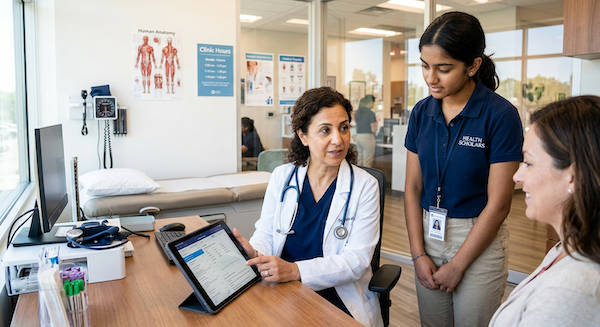
Krueger Medical Scholars Program Incentives for Physicians to Participate in Student Shadowing ProgramsPhysicians who allow students to shadow them often do so because they believe in education, mentorship, and the future of medicine. While shadowing requires additional time and effort, many doctors find the experience personally and professionally rewarding.## 1. Inspiring the Next Generation of Physicians One of the strongest motivations is the opportunity to influence and inspire future healthcare professionals. Many physicians remember mentors who helped guide them toward medicine and feel a responsibility to “pay it forward.” By exposing students to real-world patient care, physicians can: * Encourage talented students to pursue healthcare careers * Help students make informed career choices * Promote compassionate, ethical medical practice * Shape future leaders in medicine For many physicians, mentoring students is deeply meaningful. --- ## 2. Strengthening the Healthcare Workforce Pipeline The United States faces growing physician shortages in many specialties and geographic areas, especially in: * Primary care * Rural medicine * Geriatrics * Psychiatry * General surgery Early exposure to medicine can increase interest in these fields. Physicians may see shadowing as an investment in the future healthcare workforce. This is particularly important in underserved communities where recruiting future physicians is difficult. --- ## 3. Personal Satisfaction and Professional Fulfillment Teaching and mentoring often renew physicians’ own sense of purpose. Students frequently bring: * Curiosity * Enthusiasm * Fresh perspectives * Appreciation for medicine This can remind physicians why they entered healthcare in the first place and may help counter burnout or professional fatigue. Many physicians enjoy explaining: * Clinical reasoning * Patient interactions * Medical ethics * The “art” of medicine --- ## 4. Promoting Public Understanding of Medicine Shadowing helps students better understand: * The complexity of healthcare * Challenges physicians face * The realities of patient care * The demands of medical training Physicians may view this as an opportunity to improve public appreciation for medicine and healthcare professionals. --- ## 5. Supporting STEM and Community Education Many physicians participate because they value education and community outreach. Shadowing programs: * Encourage STEM learning * Support local schools * Promote health literacy * Create community engagement Hospitals and medical societies sometimes partner with schools to create educational pipeline programs. Organizations such as American Medical Association and regional medical societies often encourage mentorship and educational outreach. --- ## 6. Recruiting Future Employees or Trainees Healthcare organizations sometimes use shadowing programs to: * Identify promising future medical students * Encourage local students to remain in the area * Build relationships with future healthcare workers Students who have positive experiences may later return as: * Volunteers * Medical assistants * Nurses * Medical students * Residents * Physicians --- ## 7. Academic and Teaching Recognition Physicians affiliated with: * Teaching hospitals * Universities * Residency programs may receive professional recognition for educational involvement. In some settings, mentoring students supports: * Academic promotion * Teaching portfolios * Leadership development * Community service goals Teaching experience is often valued within academic medicine. --- ## 8. Enhancing Physician Communication Skills Teaching students requires physicians to explain: * Diagnoses * Procedures * Decision-making * Patient communication This process can improve physicians’ own communication and reflective thinking skills. Some physicians report that teaching makes them more thoughtful and intentional in their clinical practice. --- # Potential Disincentives Physicians Must Balance Despite these benefits, physicians also face challenges when participating in shadowing programs: * Time constraints * Increased workload * Patient privacy concerns * Liability issues * Workflow disruption * Administrative requirements Because of these pressures, successful programs usually require institutional support and clear guidelines. --- # Conclusion Most physicians who participate in student shadowing do so because they believe mentorship matters. They see value in inspiring young people, strengthening the future healthcare workforce, and sharing the human side of medicine. Although shadowing requires time and effort, many physicians find that helping students discover medicine can be one of the most rewarding aspects of their profession. Advertising in the BulletinWould you like to advertise in the CVMS Bulletin and/or on the CVMS website? You may advertise your medical or legal practice or any product or service here that would be appropriate for health professionals or their patients. This would be a great way to support your Medical Society and get a business tax write off for your organization. The rates listed below include one ad in each issue of the newsletter and one additional ad of the same size on the cvmedicalsociety.org website. The placement and location of the ad is under the full discretion of the editor. Sizes are approximate.
Corporate PartnersWe are proud to be associated with the following companies. We have verified the integrity and value of their services and wish to promote each one as an organization you can trust. MSVIA Altura Wealth Advisors Professional Risk TowneBank Neil L. Rose, Wilcox & Savage Eileen K. Shannon, CPA Montero Medical Missions Join Us1. For the Advocacy we can provide: The Coastal Virginia Medical Society is a group of medical professionals in eastern Virginia who are concerned about where healthcare is heading and the role that physicians must play in the process. The challenges faced by patients and the healthcare team are many and are not easy to solve. They need to be brought to the attention of the public, the health institutions, and to those in the legislature who might be able to make the appropriate changes. We believe it IS possible to improve, but we can't do it individually. Doctors and patients in large numbers however, by raising their voices, learning more about the problems and providing their input, CAN make a difference... 2. For the Social networking we can bring into our lives - the collegiality and emotional support that can bring us out of isolation and loneliness into a much fuller life with more friends, companionship and enjoyment than we ever would have had otherwise. I am reminded about the benefits of this every time I attend the Old Doc's Luncheon at Gus and George's Restaurant. The conversation and the laughter are heartening and allow us to recharge these old batteries. I think the younger folks among us could use that as well. And... 3. Just for the Fun of it and the Betterment of us all.
Thank you!Thank you for reading the CVMS Bulletin. If you have any questions or comments, please fill out the form on the contact page. If you would like to provide an article to publish in the Bulletin, please send it to cvmedsoc@gmail.com. And thank you so much for all you do in your daily activities to care for those who are ill or suffering. I would also like to express our tremendous gratitude to all our soldiers who made such huge sacrifices so that we would have the freedom and the ability to express the opinions and editorials provided here. Let us know if you wish to be involved in the CVMS organization as a director, officer, delegate, committee member, or volunteer, or if you would like to propose any resources or benefits that we could potentially provide for the membership. Also, please let us know if you are having any problems with other organizations or concerns that you would like us to help you resolve. We are here to serve our members to the best of our ability. The articles in this newsletter are written by the Editor unless otherwise indicated. The opinions expressed here are not necessarily those of MSV, other CVMS Board Members or the membership in general. Your constructive comments are always welcome. Editor: Gregory J. Warth, MD |
| Back to Back Issues Page |